Your child is crying. There is blood. And somewhere in their hand — or on the floor — is a tooth. This is one of the most frightening moments a parent can face. But here is the most important thing to know right now: stay calm, act quickly, and know that you may be able to save that tooth. Having access to a pediatric emergency dentist in Airdrie within the next hour could make all the difference between saving the tooth and losing it permanently.
The First 60 Minutes Matter Most
When a permanent tooth is knocked out, time is critical. The sooner you act — and the sooner you get to a dentist — the better the chance of saving the tooth.
Here is a simple timeline to keep in mind:
| Time Since Injury | Chance of Saving the Tooth |
| Within 30 minutes | Best possible outcome |
| 30 to 60 minutes | Still a strong chance |
| 60 to 90 minutes | Decreasing chance |
| Over 2 hours | Significantly lower chance |
Do not wait and see. Do not call friends for advice. Act immediately and get to a dentist as fast as you safely can.
Step-by-Step: What to Do Right Now
Step 1 — Stay Calm and Reassure Your Child
Your child is scared and in pain. Your calm presence helps them cooperate with what needs to happen next. Take a slow breath, speak in a reassuring voice, and let them know you are going to help them.
Step 2 — Find the Tooth
Look for the tooth immediately. Every second counts. Check the floor, the ground, or the area where the injury happened. Handle the tooth as gently as possible.
Step 3—Hold the Tooth by the Crown Only
This is very important. The crown is the white part — the part you normally see in the mouth. Do not touch the root—the bottom part that sits in the gum. The root has delicate cells attached to it that are essential for successful reimplantation. Touching or scrubbing the root can damage those cells permanently.
Step 4—Rinse the Tooth Gently If It Is Dirty
If the tooth has dirt or debris on it, rinse it very gently under clean, cool running water for no more than ten seconds. Do not scrub it. Do not use soap. Do not wrap it in tissue or cloth.
Step 5 — Try to Reinsert the Tooth Into the Socket
If your child is old enough to cooperate and the tooth is a permanent adult tooth, try to gently place it back into the socket it came from. Push it in carefully with your fingers, then have your child bite down gently on a clean cloth to hold it in place while you travel to the dentist.
Do not force it. If reinsertion is not possible, move immediately to Step 6.
Step 6 — Store the Tooth Properly
If you cannot reinsert the tooth, keeping it moist is the next most important thing. The best storage options in order of preference are:
- Milk — the most accessible option. Place the tooth in a small container of cold milk.
- Inside the cheek — if your child is old enough not to swallow it, placing the tooth between the cheek and gum keeps it moist. This is not suitable for young children.
- Saline solution — if you have it available
- Water — only as an absolute last resort. Water is not ideal but is better than letting the tooth dry out.
Never store the tooth in a dry tissue, cloth, or plastic bag with no liquid. A dry tooth cannot be saved.
Step 7 — Control the Bleeding
Gently press a clean piece of gauze or a clean cloth against the empty socket. Have your child bite down softly to apply gentle pressure. Most bleeding will slow significantly within a few minutes.
Step 8—Get to a Dentist Immediately
This is the most important step. Call ahead if you can, so the clinic is ready for you when you arrive. If your regular dentist is unavailable, search for kids dentist near you that accepts emergency walk-in appointments.
Do not go to a hospital emergency room as your first option for a knocked-out tooth—a dental professional is specifically trained to manage tooth reimplantation, and time spent waiting in an emergency room reduces the chance of saving the tooth.
Is It a Baby Tooth or a Permanent Tooth?
This changes everything—so it is important to know the difference.
If It Is a Baby Tooth
Baby teeth — also called primary teeth — are generally not reimplanted after being knocked out. Attempting to reinsert a baby tooth can damage the permanent tooth developing underneath it.
If your child has lost a baby tooth from an accident, you should still see a dentist promptly. The dentist will:
- Check for damage to the gum, bone, and surrounding teeth
- Assess whether the permanent tooth below has been affected
- Discuss options for managing the gap until the permanent tooth comes through
If It Is a Permanent Tooth
Act immediately using the steps above. Permanent teeth can often be successfully reimplanted if you act within the right timeframe and keep the tooth moist.
Not sure which type of tooth it is? Most children start losing baby teeth naturally around age six. If your child is younger than six and a front tooth has been knocked out, it is very likely a baby tooth. If your child is older, it is more likely a permanent tooth — though your dentist will confirm this.
If you are unsure—treat it as a permanent tooth and act with urgency.
What Happens at the Emergency Dental Appointment
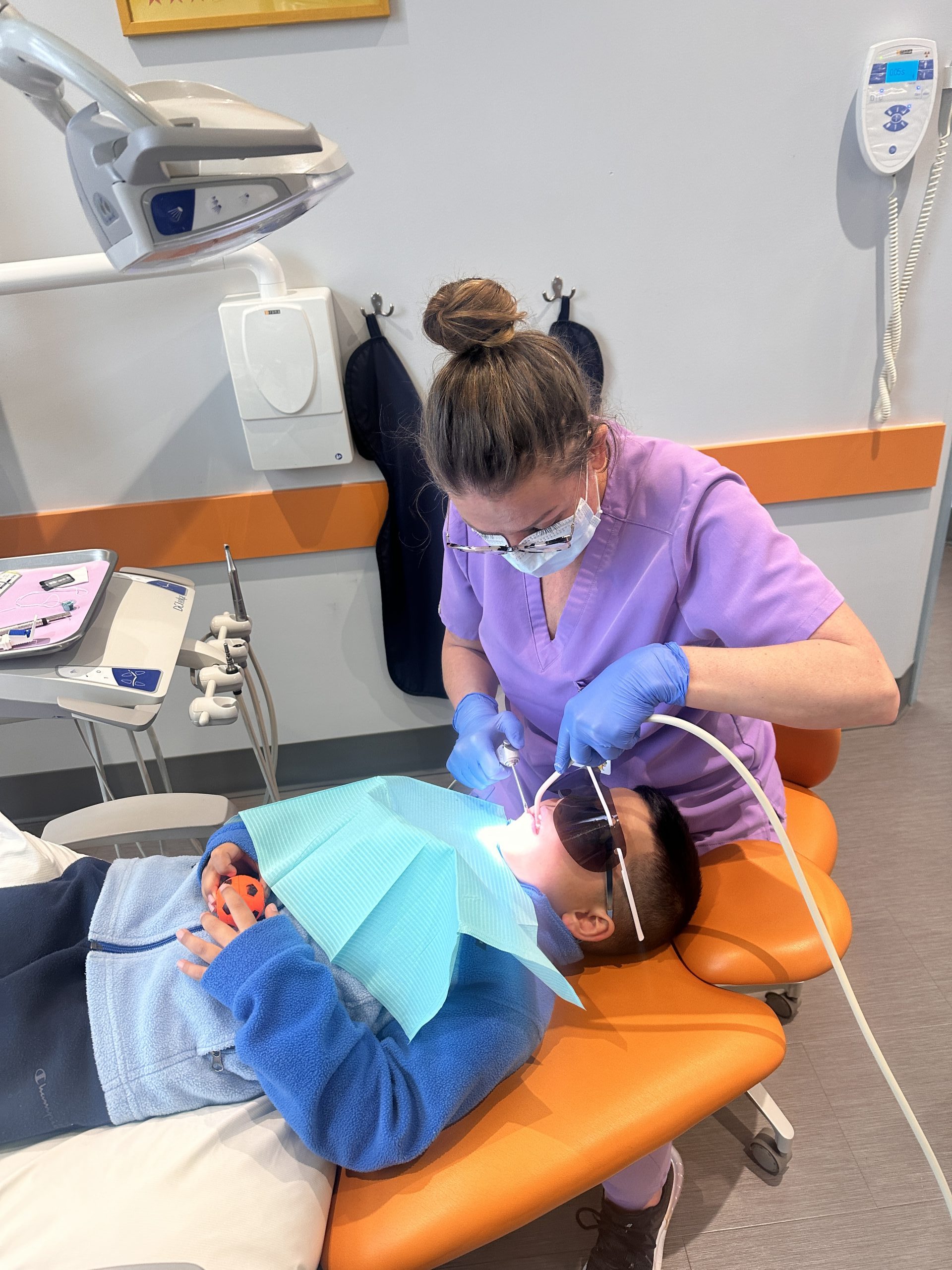
If you are thinking, “My child lost a tooth from an accident, so how will he be treated at the clinic?, then here is what to expect:
- The dentist examines the area—checking the socket, surrounding teeth, gum tissue, and jaw
- X-rays are taken to assess the bone and check for any hidden damage
- Reimplantation is attempted if appropriate—the tooth is gently placed back into the socket and stabilized with a soft splint attached to neighbouring teeth
- Pain is managed—local anesthesia is used to keep your child comfortable
- A follow-up plan is explained—the dentist will outline what to monitor and when to return
The dentist will also check for any other injuries—cuts to the lips, gums, or cheek; chips in neighbouring teeth; or jaw tenderness.
After the Emergency Visit — What to Watch For
Once your child is home after treatment, monitor them carefully over the following days and weeks.
Contact the dentist promptly if you notice:
- Increased pain or swelling after the first day or two
- Darkening of the reimplanted tooth
- The tooth feels loose or shifting position
- Any signs of infection — fever, increasing swelling, or discharge from the gum
Follow-up appointments are essential. The dentist will monitor how the tooth is healing and whether the reimplantation has been successful.
Prevention — Protecting Little Smiles
Once the emergency has passed, it is worth thinking about how to reduce the risk of dental injuries in the future.
The single most effective protection for active children is a custom-fitted mouthguard. A mouthguard made by a dentist fits precisely, stays in place during activity, and absorbs impact far more effectively than a generic pharmacy version.
It’s advisable for a child to get a custom mouthguard if they:
- Are involved in contact sports such as hockey, football, or rugby.
- Do karate, taekwondo, or boxing.
- Ride bikes, skateboards, or scooters on a regular basis.
- Engage in recreational sports like baseball or basketball.
You Handled It—Now Let the Experts Help
A knocked-out tooth is terrifying in the moment. But with the right steps taken quickly, there is a real chance of a positive outcome. You now know exactly what to do — and that knowledge matters.
At Toothpals Pediatric Dentistry, their gentle and experienced team specializes in caring for children during exactly these moments—providing calm, expert, child-friendly emergency care when your family needs it most. If your child has knocked out a tooth or experienced any dental injury, do not wait. Contact us right away and get your child the care they need immediately.
Frequently Asked Questions
Q1. What if I cannot find the knocked-out tooth?
Still, go to the dentist immediately—the dentist will examine the area for any remaining tooth fragments, assess damage to the gum and bone, and discuss next steps for managing the gap.
Q2. Can a baby tooth be reimplanted after being knocked out?
Generally, no — reimplanting a baby tooth can risk damaging the permanent tooth developing beneath it. Your dentist will advise the appropriate management based on your child’s age and dental development.
Q3. My child’s tooth was knocked loose but not knocked out—is that still an emergency?
Yes, a loosened or partially displaced tooth needs prompt dental attention. Do not try to push it back yourself. See a dentist as soon as possible.
Q4. How long will a successfully reimplanted tooth last?
Outcomes vary — some reimplanted teeth heal fully and last for many years, while others may eventually require further treatment. Your dentist will monitor the tooth closely over time and keep you informed at every stage.