
In what ways do tongue and lip ties impact a baby’s feeding and speech? Babies are priceless little packages. They must feed comfortably and grow well. Eating or talking can be difficult at times due to tightness in your tongue or lips. The Tongue & Lip Tie Release for children in Airdrie is a gentle procedure that helps them eat, speak, and thrive.
This treatment helps when a baby’s tongue or upper lip is too tight, limiting movement. It can affect breastfeeding, bottle-feeding, or later speech development. A pediatric dentist near you can assess your child and recommend the best care at the right time.
Understanding Tongue and Lip Ties
A tongue tie (ankyloglossia) occurs when the tissue that connects one’s tongue to the floor of their mouth is unusually short or tight. An infant or young child with this condition will face many problems.
- Trouble latching when breastfed.
- Extended mealtimes or feelings of frustration.
- As the child grows, speech development issues may arise.
- Dental hygiene problems due to limited tongue movement
Pediatric dentistry in Airdrie offers a variety of treatment options, including laser procedures that safely and precisely release the tie. Early intervention is often recommended to prevent complications and promote healthy development.
How Tongue & Lip Tie Release Works
The process is often fast and noninvasive. There are two most common methods.
- Laser Release: A precise laser is used to cut through tissue, minimizing bleeding and allowing healing to begin sooner. This technique is often painless and requires slight recovery.
- Scissor Release: Traditional techniques use surgical scissors to release the tissue, usually with local anesthesia for comfort.
Parents frequently choose the laser option because it’s less invasive, reduces discomfort, and is often completed in one visit. When a tongue-tie release for breastfeeding babiesis performed, breastfeeding becomes more effective, reducing stress for both parent and baby.
Benefits of Early Tie Release
Early engagement can significantly influence a child’s growth. Some advantages are.
- Improved Feeding: Babies latch on right for good nutrition and weight gain.
- Better Speech Development: Repairing tongue-tie in infants reduces the risk of speech delays or articulation difficulties later in life.
- Improved Oral Health: With restored tongue mobility, children can pop their mouths more efficiently. As a result, the risk of cavities and gum disease is lower.
- Comfort and Bonding: Feeding becomes less frustrating, and bonding becomes easier for both the parent and the child.
The benefits of early tie release on speechare particularly notable because these structures play essential roles in sound production. Correcting the issue early ensures children develop standard speech patterns with minimal intervention later.
What to Expect During a Tie Release Procedure
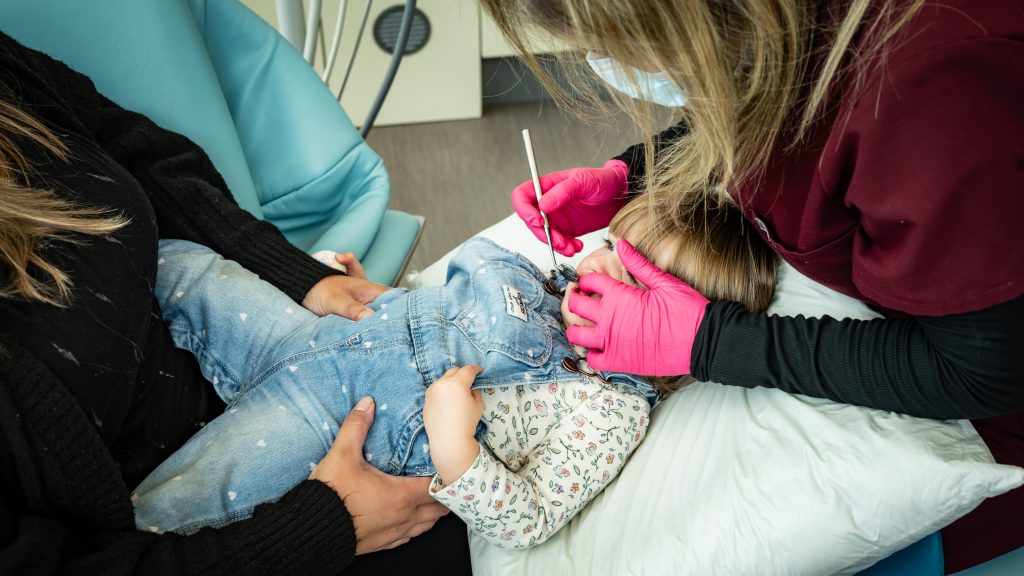
When you visit a dentist near you for pediatric tongue and lip tie treatment, here’s what usually happens:
- Evaluation: The pediatric dentist examines the mouth and identifies the extent of the tie.
- Anesthesia: Local numbing or topical anesthesia is applied to ensure the child is comfortable.
- Release: The tissue is released with a gentle cut or a laser to free the tongue or lip.
- Aftercare: May include simple exercises to prevent reattachment and encourage movement.
The process is fast, usually completed in minutes. Most common with babies who experience minor discomfort and are fed immediately.
How Parents Can Support Recovery
Since tongue and lip tie release is a minor procedure, aftercare is straightforward.
- Exercise Guidelines: Gentle stretching will help maintain the range of motion as recommended by your dentist.
- Observe Feeding Process: Monitoring latch and feeding efficiency.
- Pain Management: It is common to experience pain after the dental work. Your dentist may recommend a safer option that will help with the pain.
- Regular Check-Ups: Follow-up visits ensure that healing is progressing and that reattachment does not occur.
Pediatric dentistry in Airdrie emphasizes a gentle, supportive approach, helping families feel confident in caring for their child after the procedure.
When to Consider a Tongue & Lip Tie Evaluation
If parents notice their child consulting a pediatric dentist near you.
- Trouble with breastfeeding or bottle-feeding.
- Noises of clicking while feeding.
- Your child has gas, colic, or reflux.
- Difficulty pronouncing sounds and speech delays.
- You have difficulty cleaning your teeth or develop cavities frequently.
Timely assessment usually prevents these problems from becoming long-term and can help make treatment safer.
Schedule a Tongue & Lip Tie Consultation Today!
Ensure your child eats comfortably and speaks clearly by addressing tongue and lip ties early. Toothpals Pediatric Dentistry – Schedule an Appointment to discuss your child’s specific needs and effective treatment options. The team is committed to supporting your family with compassionate guidance through the entire process.
FAQs
1. Will the procedure hurt the babies?
No. The process is quick and performed under gentle anesthesia or with a numbing cream. Most infants recover easily.
2. Can older kids take advantage of the tie release?
Indeed, although it is best done early, older children can benefit from improvements in speech, oral hygiene, and feeding with proper release.
3. How long does it take to heal?
Most babies recover from a sore throat in a week; older ones may take weeks to heal.
4. Are there risks with laser elease?
Laser release is safe and precise. Risks are minimal, primarily when performed by a trained pediatric dentist.